Rotating Hinge Thermocouple
Best for searing and roasting where probe stowage safeguards the needle tip. Pivot internal wiring experiences rotational shear over thousands of openings.
A compact digital thermometer lives in steam, rendered fat, and high-heat pan edges. This guide decodes sensor response curves, probe tip geometry, and hinge endurance to help cooks evaluate published claims with analytical clarity.
Thermocouple junctions offer sub-second readouts through microscopic wire tips; NTC thermistors offer pinpoint decimal precision at measured pace.
IP65 resists direct sink rinses; IP67 withstands brief basin immersion. Gasket fatigue at the battery compartment remains the primary failure point.
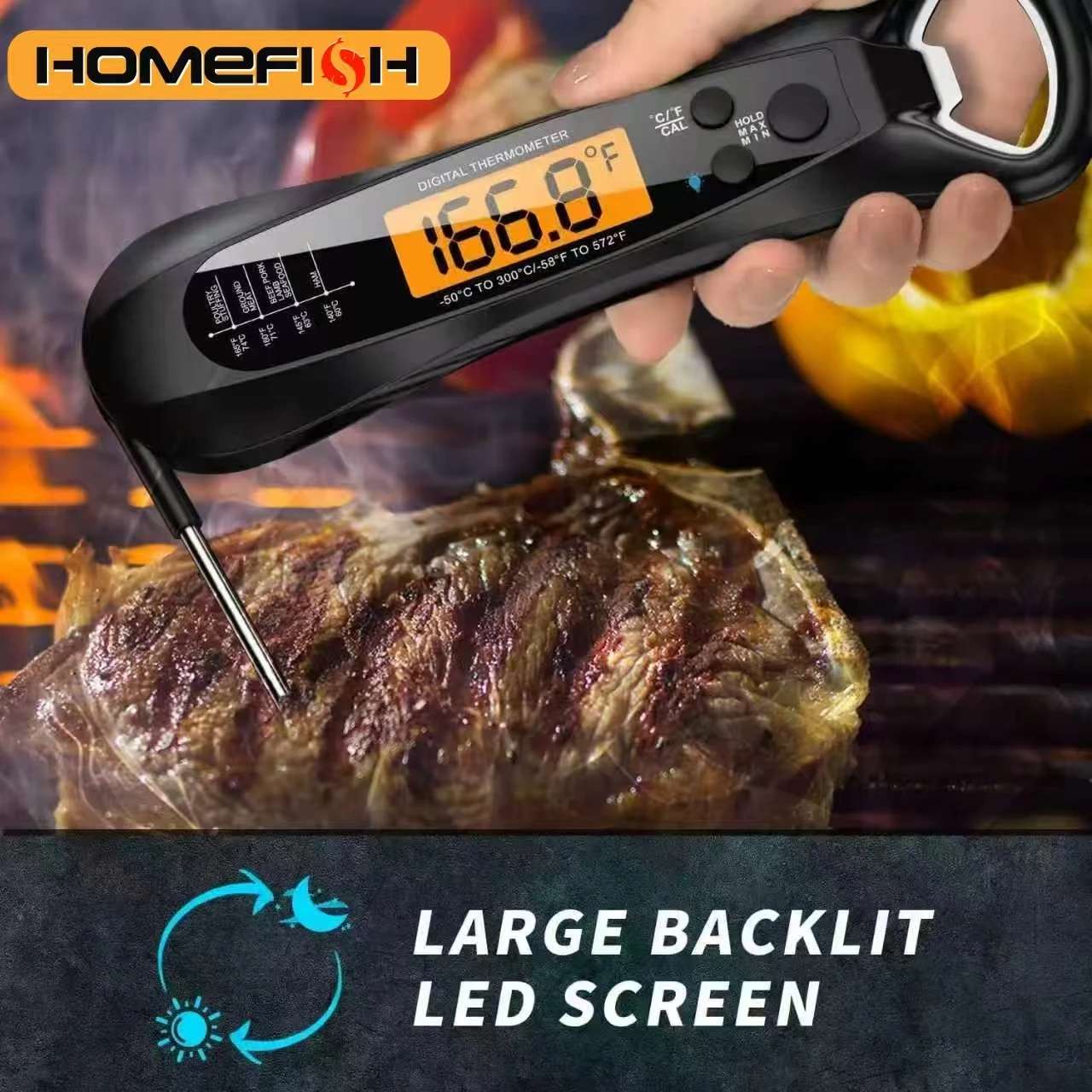
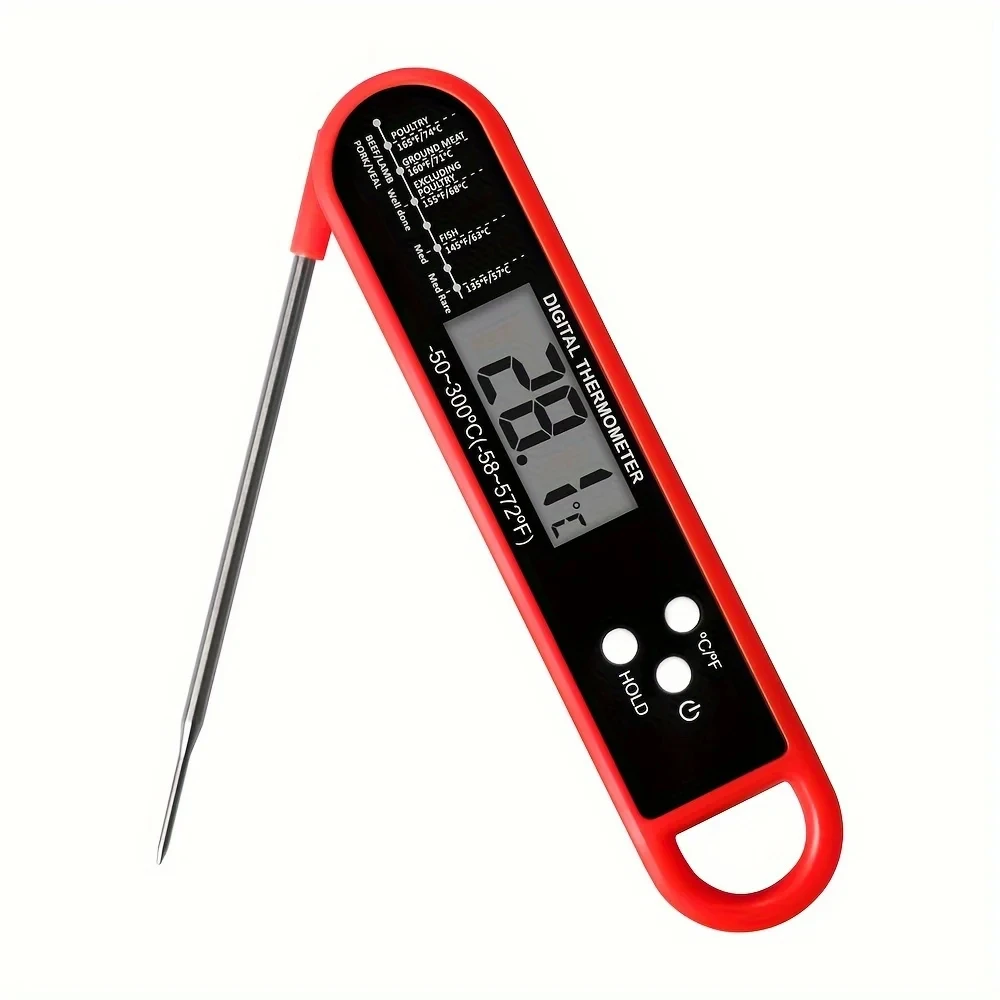
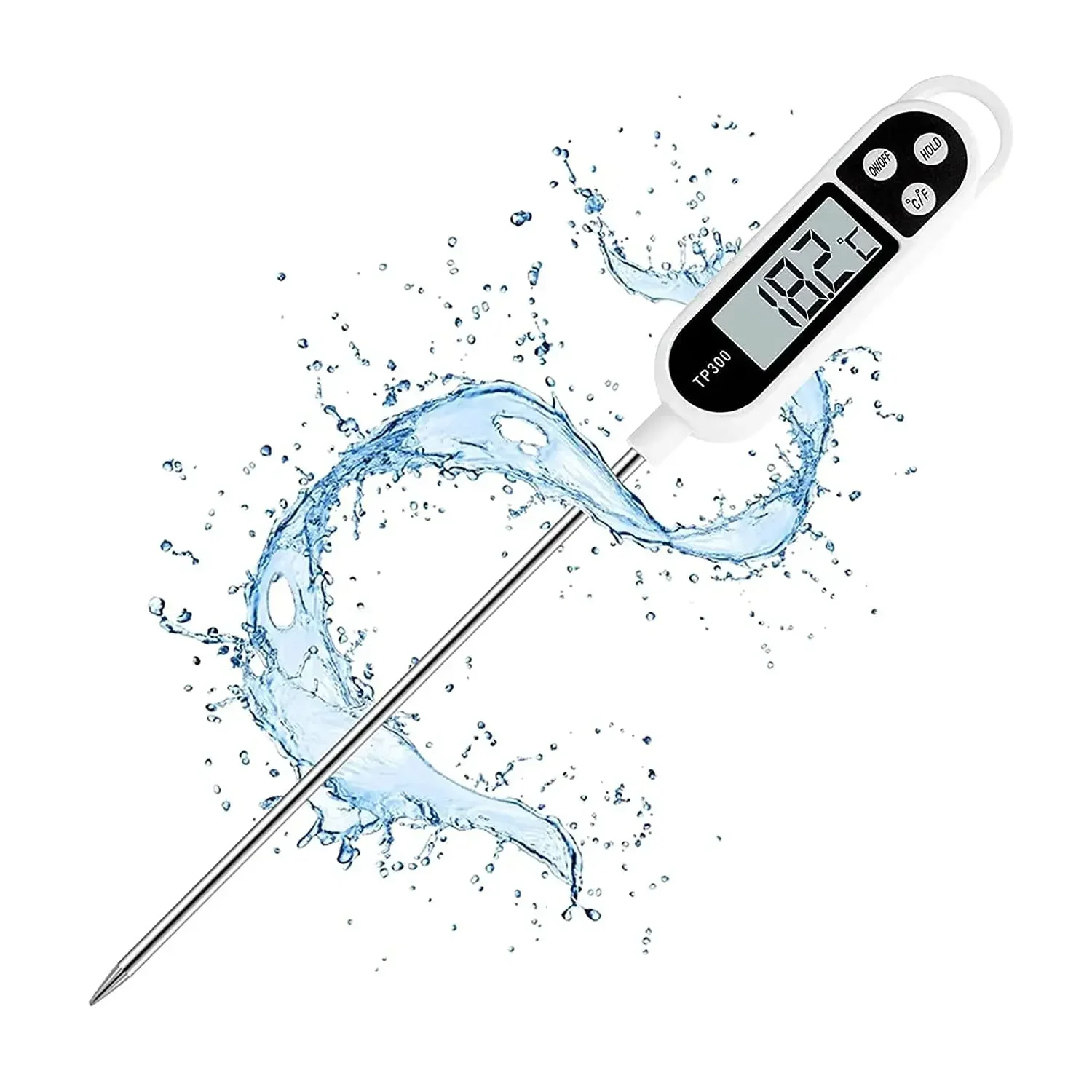
Best for searing and roasting where probe stowage safeguards the needle tip. Pivot internal wiring experiences rotational shear over thousands of openings.
Pocket-clip designs without hinges. Immune to pivot wear and moisture ingress through joint gaskets, but requires two hands to unsheathe and activate.
Internal accelerometers flip numeric displays for left-handed reads or inverted candy sugar angles. Evaluated by backlight contrast and drain on coin cells.
Reduced-mass 1.2mm needle tips minimize juice loss in delicate proteins like fish fillets, though thin metal shafts bend easily under cold butter or roast fowl bones.
A probe cannot report the internal temperature faster than heat conducts across its sheath into the internal junction. Thicker tips stabilize slower; ultra-thin tips heat fast but sacrifice lateral rigidity.
Oven steam and extractor hood lighting wash out low-contrast LCD screens. Look for high-contrast white-on-black or active backlight displays with wide viewing angles above 140 degrees.
Folding units must maintain internal spring detent resistance. When the hinge loosens, the probe swings free, compromising moisture seals and auto-wake switch contacts.
Over hundreds of thermal cycles, all sensors drift slightly. Probes with manual ice-point calibration buttons allow home cooks to re-zero back to 0.0°C without factory recertification.
This site contains affiliate links. We may earn a commission at no extra cost to you.